









Stop the Grind: 3 DM Secrets to 2X Client Acquisition
The relentless pursuit of new clients can often feel like an uphill battle. Marketers frequently find themselves caught in a cycle of diminishing returns, pouring resources into campaigns that yield only incremental growth. We understand this challenge deeply, having systematically analyzed countless digital marketing strategies across diverse industries. The good news? Escaping this grind and significantly boosting client acquisition is not only possible but achievable through targeted, data-driven approaches. We've distilled our extensive experience into three pivotal digital marketing secrets that, when implemented synergistically, have consistently delivered remarkable results, often doubling client acquisition for our partners.
This article will unpack these strategies, moving beyond generic advice to provide actionable insights grounded in real-world application. We aim to equip you with the knowledge to transform your client acquisition efforts, making them more efficient, effective, and ultimately, more profitable. Our focus is on practical implementation, ensuring that even complex concepts are presented in a simple and conversational manner.
Secret #1: Hyper-Personalization Through Advanced Audience Segmentation
The Foundation of Connection: Knowing Your Audience Intimately
Many marketing efforts falter because they treat the audience as a monolithic entity. However, the digital landscape offers unprecedented opportunities to understand individual preferences, behaviors, and needs. We've observed that the most successful client acquisition strategies begin with a forensic deep dive into audience segmentation, moving beyond basic demographics to psycho-graphics, behavioral patterns, and intent signals. This isn't just about grouping people; it's about crafting tailored experiences that resonate on a personal level.
Consider the difference between targeting "women aged 25-34" versus "women aged 25-34 who frequently browse luxury travel blogs, have recently searched for 'boutique hotel Europe,' and have engaged with similar content in the past 30 days." The latter offers a significantly higher probability of conversion because the message can be precisely aligned with immediate intent and expressed interests. This granular approach necessitates robust data collection and sophisticated analytical tools.
We systematically utilize platforms that allow for multi-dimensional segmentation, combining first-party data (CRM, website analytics) with third-party insights (social media behavior, search trends). This holistic view enables us to build rich, detailed buyer personas that guide every aspect of campaign development, from ad copy and creative design to landing page experiences. The goal is to move from broad strokes to detailed portraits, ensuring that every interaction feels uniquely crafted for the recipient.
Implementing Dynamic Content and Messaging
Once audiences are segmented, the next step is to deliver highly relevant content. This goes beyond simply using a prospect's name in an email. It involves dynamic content that adapts in real-time based on user behavior, prior interactions, and segment characteristics. For instance, a user who abandoned a shopping cart might receive an ad featuring the exact products they left behind, perhaps with a limited-time offer. A user who downloaded a specific whitepaper might then be served content related to the next logical step in their buyer journey.
We have found that A/B testing different personalized messages across various segments is crucial. What resonates with one group might fall flat with another. Continuous optimization, driven by performance data, ensures that personalization efforts remain effective and evolve with audience preferences. This iterative process allows us to refine our messaging, leading to significantly higher engagement rates and, consequently, increased client acquisition. This method transforms generic campaigns into highly effective, individualized dialogues, making prospects feel truly seen and understood by your brand.
Secret #2: Leveraging Advanced Analytics for Predictive Insights and Attribution
Beyond Last-Click: Understanding the Full Customer Journey
Many marketers still rely on simplistic attribution models, such as last-click, which often misrepresent the true value of different touchpoints in the client acquisition journey. We have consistently observed that a comprehensive understanding of the customer path requires advanced attribution modeling. This allows us to accurately credit every interaction that contributes to a conversion, from the initial awareness-driving impression to the final conversion click. By moving beyond single-touch models, we gain a holistic view of how various channels influence user behavior.
Linear, time-decay, and data-driven attribution models provide a much clearer picture of marketing effectiveness. By analyzing the entire sequence of interactions, we can identify which channels and campaigns are truly influencing decisions at various stages. This granular insight is invaluable for optimizing budget allocation and refining strategies. For instance, a display ad that never gets a "last click" might be critical for initial brand awareness, while a search ad closes the deal. Without proper attribution, the display ad's contribution might be overlooked, leading to misguided budget cuts.
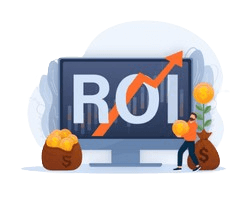
We systematically integrate data from all touchpoints – social media, search engines, email, display ads, website visits – into a unified analytics platform. This allows us to map intricate customer journeys and derive actionable insights. For those looking to optimize their ad spend effectively, tools that provide a Meta Ad Cost Calculator - Budget, Leads & ROI Estimator can be invaluable for projecting ROI based on various attribution models and understanding the true cost per acquisition across diverse channels.
Predictive Analytics: Anticipating Future Client Needs
The true power of advanced analytics extends beyond understanding past behavior; it lies in its ability to predict future outcomes. We leverage machine learning algorithms to identify patterns that indicate a higher propensity for conversion. This includes predicting which leads are most likely to convert, which customers are at risk of churn, and even which new products or services will resonate best with specific segments. This forward-looking approach allows for a proactive and highly efficient marketing strategy.
By analyzing historical data such as website visits, content consumption, email opens, and engagement with previous campaigns, we can build predictive models. These models empower us to proactively engage high-potential leads with precisely timed and tailored messages, significantly increasing the likelihood of acquisition. This shifts the marketing paradigm from reactive to proactive, allowing for highly efficient resource allocation and maximizing the return on investment for marketing efforts.
For example, if our models indicate that leads who visit a specific product page three times and download a case study within 48 hours have an 80% conversion rate, we can automate a direct outreach or a targeted ad sequence specifically for individuals exhibiting this behavior. This level of foresight is a game-changer for client acquisition, allowing you to intercept prospects at their peak moment of interest.
Comparative Attribution Models
Understanding the nuances of different attribution models is vital for accurate performance measurement. Here's a brief comparison of some commonly used models:
| Attribution Model | Description | Pros | Cons |
|---|---|---|---|
| Last-Click | 100% of credit goes to the last touchpoint before conversion. | Simple to implement and understand. | Ignores all prior touchpoints; undervalues awareness and consideration channels. |
| First-Click | 100% of credit goes to the first touchpoint in the conversion path. | Highlights channels effective at initiating customer journeys. | Ignores all subsequent touchpoints; undervalues channels that drive conversion. |
| Linear | Credit is evenly distributed across all touchpoints in the conversion path. | Acknowledges all interactions. | Assumes all touchpoints have equal importance, which is rarely true. |
| Time Decay | Touchpoints closer in time to the conversion get more credit. | Values recent interactions more, reflecting typical sales cycles. | Still rule-based; may not accurately reflect complex interactions. |
| Position-Based | Assigns more credit to the first and last interactions, with remaining credit distributed among middle interactions. | Balances the importance of initial discovery and final conversion. | Credit distribution can be arbitrary; complex to implement. |
| Data-Driven (Algorithmic) | Uses machine learning to algorithmically distribute credit based on the unique conversion paths and actual contribution of each touchpoint. | Most accurate and adaptive; reflects true value. | Requires significant data; often a "black box" without clear explanations for credit assignment. |
We advocate for the use of data-driven attribution where possible, as it provides the most sophisticated and accurate insights into marketing effectiveness, leading to optimized client acquisition strategies. Google Analytics 4 (GA4) offers enhanced data-driven attribution capabilities, helping marketers understand complex customer journeys. For more insights on digital advertising, the official Google Ads Best Practices often highlight the importance of data-driven approaches and advanced measurement.
Secret #3: Mastering Multi-Channel Synergy and Intelligent Retargeting
Orchestrating a Seamless Customer Experience
In today's fragmented digital landscape, clients interact with brands across numerous channels – social media, email, websites, search engines, apps, and more. The third secret to doubling client acquisition lies in orchestrating these touchpoints to create a seamless, cohesive, and compelling customer journey. This isn't about being everywhere; it's about being in the right places, at the right time, with the right message. The goal is to provide a consistent and positive brand experience, regardless of the platform.
We systematically develop multi-channel strategies that ensure consistency in brand messaging and user experience. This means integrating data from all channels so that a user's interaction on one platform informs their experience on another. For example, if a user watches a product video on YouTube, they might subsequently see a display ad for that product on a news site, followed by an email with a direct call to action, all without feeling repetitive or intrusive. This thoughtful coordination creates a sense of continuous engagement rather than disjointed interruptions.
The goal is to guide prospects naturally through the sales funnel, providing value at each stage and removing friction points. This synergy ensures that every marketing dollar contributes to a unified objective, maximizing the impact of each campaign. A strong foundational element for any successful digital presence is a well-designed and highly functional website, serving as the central hub for these integrated efforts. As a leading Web Design & Digital Marketing Company in Gurgaon | PS TECH, we emphasize