










AI for Digital Growth: A Smart Marketer's 2026 Guide
In the rapidly evolving landscape of digital marketing, the integration of Artificial Intelligence (AI) is no longer a futuristic concept but a present-day necessity. For smart marketers looking ahead to 2026, AI represents not just an advantage, but a fundamental shift in how we approach strategy, execution, and optimization. We have systematically analyzed the trajectory of digital trends and the capabilities of emerging AI technologies to provide a comprehensive guide that will empower you to leverage AI for unprecedented growth, saving countless hours each week.
The promise of AI extends far beyond automation; it offers a pathway to hyper-personalization, predictive analytics, and scalable efficiency that traditional marketing methods simply cannot match. This guide will walk you through the essential applications of AI, practical implementation strategies, and critical considerations for marketers aiming to thrive in the competitive digital arena of 2026.
The Irresistible Force: Why AI is Indispensable for Marketers in 2026
The digital marketing world has become an increasingly complex ecosystem. Consumer expectations for personalized experiences are at an all-time high, data volumes are exploding, and the competition for attention is fiercer than ever. In this environment, relying solely on human intuition and manual processes is akin to navigating a superhighway with a map and compass when everyone else has GPS.
AI provides the necessary computational power and analytical prowess to cut through this complexity. It empowers marketers to process vast amounts of data, identify intricate patterns, and make informed decisions at a speed and scale impossible for humans alone. From understanding audience sentiment to predicting future market trends, AI offers a competitive edge that directly translates into improved return on investment (ROI) and significant time savings. We have observed that businesses failing to adopt AI risk being left behind, struggling with inefficiencies and an inability to meet the dynamic demands of the modern consumer.
Core Pillars of AI-Powered Digital Marketing
The applications of AI in digital marketing are expansive and continue to grow. We have identified several core areas where AI is already making a profound impact and will be absolutely critical by 2026.
Revolutionizing Content Creation and Curation
Content remains king, but the sheer volume and personalization required can overwhelm even the most dedicated teams. AI is transforming this challenge into an opportunity. AI-driven tools can generate compelling content at scale, ranging from blog posts and social media updates to ad copy and email subject lines, often tailored to specific audience segments. Natural Language Generation (NLG) advancements mean these outputs are increasingly indistinguishable from human-written text, especially for routine or data-driven content.
Beyond creation, AI excels at content curation. It can analyze vast amounts of data to identify trending topics, pinpoint content gaps within your niche, and even suggest optimal posting times for maximum engagement. This allows marketers to focus their creative energy on high-level strategy and refining AI-generated drafts, rather than starting from scratch.
Supercharging SEO and Keyword Strategy
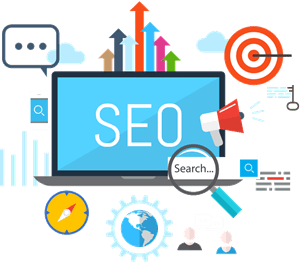
Search Engine Optimization (SEO) is an area where AI's analytical capabilities truly shine. Traditional keyword research can be time-consuming and often reactive. AI tools, however, can perform in-depth keyword analysis, uncover long-tail opportunities, and identify competitor strategies with unprecedented speed and precision. They can predict search trends, analyze search intent, and even optimize content for voice search, which is becoming increasingly prevalent.
AI algorithms can also assist with on-page SEO by suggesting optimal heading structures, internal linking opportunities, and readability improvements. For technical SEO, AI-powered crawlers can quickly identify and flag issues like broken links, slow loading times, or mobile unfriendliness, allowing for proactive site optimization. This means less guesswork and more data-driven decisions, leading to higher rankings and increased organic traffic.
Precision Targeting with AI-Enhanced Advertising
Advertising platforms like Meta and Google have been at the forefront of AI integration, and by 2026, their AI capabilities will be even more sophisticated. Marketers can leverage AI for advanced audience segmentation, creating hyper-targeted campaigns based on intricate behavioral patterns, demographics, and psychographics. AI optimizes bidding strategies in real-time, ensuring your ad spend is maximized for the best possible results. Dynamic creative optimization allows AI to test countless ad variations and serve the most effective ones to individual users.
Furthermore, AI provides predictive analytics for campaign performance, allowing marketers to adjust strategies proactively rather than reactively. This level of precision targeting not only improves campaign ROI but also enhances the user experience by delivering more relevant ads. If you are looking to understand your advertising costs, our Meta Ad Cost Calculator - Budget, Leads & ROI Estimator can be a valuable tool to project your expenses and potential returns.
Elevated Customer Experience Through AI
The customer journey is complex, and AI is playing an increasingly vital role in enhancing every touchpoint. Chatbots and virtual assistants, powered by advanced Natural Language Processing (NLP), can provide instant 24/7 support, answer frequently asked questions, and guide customers through sales funnels. This not only improves customer satisfaction but also frees up human support agents to handle more complex inquiries.
Beyond immediate support, AI enables personalized recommendations for products, content, and services based on individual browsing history, purchase patterns, and declared preferences. Sentiment analysis tools can monitor social media and customer feedback to gauge public opinion about your brand, allowing for proactive engagement and reputation management. The goal is a seamless, personalized, and efficient customer experience that fosters loyalty and drives repeat business.
Unleashing the Power of Data Analysis and Insights
The sheer volume of data generated by digital marketing activities can be overwhelming. AI excels at processing, analyzing, and interpreting these massive datasets to extract meaningful insights. It can identify subtle trends, predict customer behavior with remarkable accuracy, and uncover correlations that would be invisible to human analysts.
AI-powered analytics tools move beyond descriptive reporting ("what happened?") to predictive ("what will happen?") and prescriptive ("what should we do?"). They can optimize attribution models, revealing the true impact of different marketing channels, and provide a holistic view of campaign performance. This transforms raw data into actionable intelligence, allowing marketers to make smarter, more strategic decisions across all initiatives.
Crafting Your AI Marketing Strategy: A Step-by-Step Approach
Integrating AI into your marketing strategy might seem daunting, but by adopting a structured approach, you can harness its power effectively and incrementally.
Assessing Current Needs and Goals
Before diving into tools, identify your marketing team's biggest pain points and where AI could offer the most significant impact. Are you struggling with content volume? Is ad spend inefficient? Is customer support stretched thin? Clearly defining your objectives will guide your AI adoption strategy. Begin with specific, measurable goals, such as "reduce customer service response time by 30% using AI chatbots" or "increase ad campaign ROI by 15% through AI optimization."
Piloting AI Tools and Platforms
Start small. Instead of a full-scale overhaul, select a few AI tools for specific functions and run pilot projects. Many AI solutions offer free trials or introductory tiers, allowing you to test their efficacy without significant upfront investment. Look for tools that integrate well with your existing marketing stack and data infrastructure. Analyze the results from these pilots, learn from them, and iterate before scaling up.
Building an AI-Ready Team
AI is a tool, and its effectiveness depends on the people wielding it. This means investing in upskilling your current marketing team. Training can focus on understanding AI capabilities, interpreting AI-generated insights, and effectively using AI tools. Consider specific roles like "prompt engineer" for content and creative teams, who specialize in crafting effective prompts for generative AI models. Fostering a culture of continuous learning and experimentation is paramount.
Integrating AI with Human Expertise
AI is most effective when it augments human capabilities, not replaces them entirely. Human marketers bring creativity, emotional intelligence, strategic thinking, and ethical considerations that AI currently lacks. The optimal approach is a symbiotic relationship where AI handles repetitive, data-intensive tasks, while humans focus on high-level strategy, creative direction, relationship building, and critical oversight. For example, a trusted partner like a Web Design & Digital Marketing Company in Gurgaon | PS TECH can help you integrate these advanced tools with expert human strategy, ensuring a cohesive and effective digital presence.
Navigating the AI Landscape: Challenges and Ethical Considerations
While the potential of AI is immense, smart marketers must also be aware of the challenges and ethical dilemmas that come with its adoption. Responsible AI use is not just good practice; it's essential for maintaining consumer trust and ensuring long-term success.
Data Privacy and Security
AI systems are voracious consumers of data. This raises significant concerns about how personal data is collected, stored, processed, and protected. Marketers must ensure compliance with regulations such as GDPR, CCPA, and other regional data privacy laws. Transparency with customers about data usage and robust cybersecurity measures are non-negotiable. Breaches of trust can have devastating consequences for brand reputation.
Algorithmic Bias
AI models learn from the data they are trained on. If this data contains historical biases or reflects societal inequities, the AI can perpetuate or even amplify those biases. This can lead to discriminatory outcomes in ad targeting, content generation, or customer service interactions. Marketers must actively work to identify and mitigate algorithmic bias, ensuring their AI systems are fair, inclusive, and ethical. This often involves careful data selection, model auditing, and diverse team input.
The "Black Box" Problem
Many advanced AI models, particularly deep learning networks, can be complex, making it difficult to understand exactly how they arrive at a particular decision or prediction. This lack of transparency, often called the "black box" problem, can be problematic in regulated industries or situations where accountability is paramount. Striving for explainable AI (XAI) models, where the reasoning process can be understood, is an important goal. Organizations like the National Institute of Standards and Technology (NIST) are actively developing frameworks, such as the AI Risk Management Framework, to help manage these complexities and promote trustworthy AI.
The responsible implementation of AI requires ongoing vigilance, ethical deliberation, and a commitment to transparency. Smart marketers will integrate these considerations into the very fabric of their AI strategy.
Traditional vs. AI-Powered Marketing: A Comparative Overview
To highlight the transformative power of AI, let's compare some key aspects of traditional marketing approaches with their AI-powered counterparts.
| Feature | Traditional Marketing | AI-Powered Marketing |
|---|---|---|
| Data Analysis | Manual, often limited to aggregated reports; descriptive insights ("what happened"). | Automated, processes vast datasets in real-time; predictive and prescriptive insights ("what will happen," "what to do"). |
| Personalization | Segment-based, generalized messaging for broad groups. | Individualized at scale, hyper-personalized content and offers for each user. |
| Content Creation | Human-intensive, time-consuming, limited by human capacity. | AI-assisted and generated, rapid scaling of diverse content types, human oversight. |
| Campaign Optimization | Reactive, A/B testing over time, manual adjustments. | Proactive, real-time optimization of bids, targeting, and creatives based on live data. |
| Cost & Efficiency | Higher manual labor costs, often less efficient resource allocation. | Lower operational costs through automation, higher potential ROI due to precision and speed. |
| Customer Service | Human agents, limited hours, slower response times. | 24/7 chatbots and virtual assistants, instant responses, personalized support, human escalation for complex issues. |
The Road Ahead: AI in 2026 and Beyond
The advancements in AI are not slowing down. By 2026, we anticipate even more sophisticated capabilities that will further revolutionize digital marketing. We expect to see greater integration of AI with emerging technologies like Web3, offering new paradigms for decentralized marketing and privacy-preserving data utilization. Hyper-personalization will evolve into truly adaptive experiences, where AI continuously learns and adjusts in real-time to individual preferences and moods.
Autonomous marketing systems, capable of executing entire campaigns from strategy to optimization with minimal human intervention, will become more prevalent for certain types of marketing. The rise of synthetic media and advanced generative AI will also push the boundaries of creative content, requiring marketers to develop new skills in guiding and curating AI's output. According to experts at institutions like MIT, the convergence of AI with other cutting-edge technologies will unlock unprecedented levels of efficiency and creativity, fundamentally reshaping industries worldwide. (MIT News - AI Topic)
Preparing for this future means staying informed, continuously experimenting with new tools, and fostering a mindset of adaptability within your marketing team. The role of the marketer will shift from task execution to strategic oversight, ethical governance, and creative direction, leveraging AI as a powerful force multiplier.
Conclusion: Embrace AI for Sustainable Digital Growth
For the smart marketer, 2026 is not a distant horizon but a tangible reality where AI will be an indispensable partner. The benefits are clear: unprecedented efficiency, deeper insights, hyper-personalized customer experiences, and significantly improved ROI. We have seen firsthand how businesses that strategically embrace AI gain a formidable competitive edge, saving countless hours each week that can be redirected toward innovation and higher-value tasks.
Adopting AI is not merely about implementing new technology; it's about evolving your entire marketing philosophy. It requires a commitment to continuous learning, ethical consideration, and a collaborative spirit between human intelligence and artificial intelligence. By understanding its core applications, carefully integrating it into your strategy, and responsibly navigating its challenges, you can unlock sustainable digital growth and cement your position as a leader in the dynamic world of digital marketing.